

How to Stop Dwelling on the Past and Find Peace in God
How to Stop Dwelling on the Past and Find Peace in God
You can learn from yesterday without making it the place you live.
The conversation ended hours ago, but you are still answering it in your mind.
You think of what you should have said. You replay the moment you wish you could change. An old decision comes back while you wash the dishes, drive home, or try to settle into sleep.
Sometimes you are looking for a lesson. Sometimes you are hoping that thinking about it one more time will somehow give you a different ending.
If you are wondering how to stop dwelling on the past, begin gently. You do not have to force yourself to forget. You can bring the memory, the regret, and the unfinished feelings into the presence of God.
He meets you here, in the day you are actually living.
“It is of the LORD’S mercies that we are not consumed, because his compassions fail not. They are new every morning: great is thy faithfulness.”
Lamentations 3:22–23, KJV
Notice when remembering becomes replaying
Looking back can help us understand an experience. We may recognize something we need to confess, a lesson we need to learn, or a loss that deserves time and care.
But there are moments when the same scene keeps turning over without helping us respond. We ask the same question, imagine the same correction, and arrive at the same hurt.
When you notice that happening, ask: Is this helping me understand what happened, or am I trying to change something that has already happened?
You may discover a practical next step. Or you may realize that you have reached the limit of what another mental replay can give you.
Bring regret to God with honesty
Perhaps you did something you wish you had handled differently. Peace can begin with naming it clearly.
You can confess your part to God. You can apologize without defending yourself, repair what you can, and ask for wisdom about what needs to change.
Then notice what happens after you have taken responsibility. Are you learning how to live differently, or repeatedly putting yourself back on trial?
First John 1:9 invites us to confess our sins and trust God’s faithfulness to forgive and cleanse us. Receiving that grace gives us room to grow. It does not erase consequences, but it means we can face them with God.
If the memory involves harm someone did to you, their actions are not yours to confess. You can bring that hurt to Jesus without minimizing it or accepting blame that does not belong to you.
God’s mercy meets you in an unfinished story
The words about new mercies in Lamentations were spoken amid deep sorrow. Hope appears alongside grief, while the pain is still real.
You can receive today’s mercy while missing someone. You can ask God for help while wishing a season of life had unfolded differently. You can take a small step forward with questions still unanswered.
Healing may include prayer, patient reflection, and conversations with someone who can help you carry the story with care. You do not have to rush yourself into feeling settled.
For this moment, begin with what is within reach: God, help me receive the grace You have for me today.
A Scripture-centered practice for moving forward
When an old scene returns, try these four movements slowly. Give yourself room to be honest.
Recognize what your mind is returning to
Name the memory and the sentence attached to it. Perhaps you are thinking, I should have known better, or That moment ruined everything. Notice the conclusion you are carrying as well as the event itself.
Replace the conclusion with a more faithful response
Open Scripture and read with care. First John 1:9 can guide confession and receiving forgiveness. Psalm 34:18 reminds us of God’s nearness to the brokenhearted. Ask what the passage helps you remember about God and your next response.
Rest in God’s presence
Pause before trying to solve the entire story. Feel your feet on the floor, take an unhurried breath, and tell Jesus what hurts. You can be with Him without reaching a final explanation.
Practice one faithful step today
Make the apology. Write down what you have learned. Ask for support. Give your attention to the person beside you. Choose a small action that belongs to today’s life.
If the memory returns, you can repeat the practice. Its return does not mean you have lost the ground you gained.
Help me meet You in this day.
Father, You know the moments I keep replaying and the things I wish I could change. Give me courage to take responsibility where I need to, and help me receive Your forgiveness. Tend to the hurts I still carry. Teach me to recognize when looking back has become another way of keeping myself in pain. Guide me toward wise support and one faithful step today. Help me trust that Your mercy is present in this unfinished story. Amen.
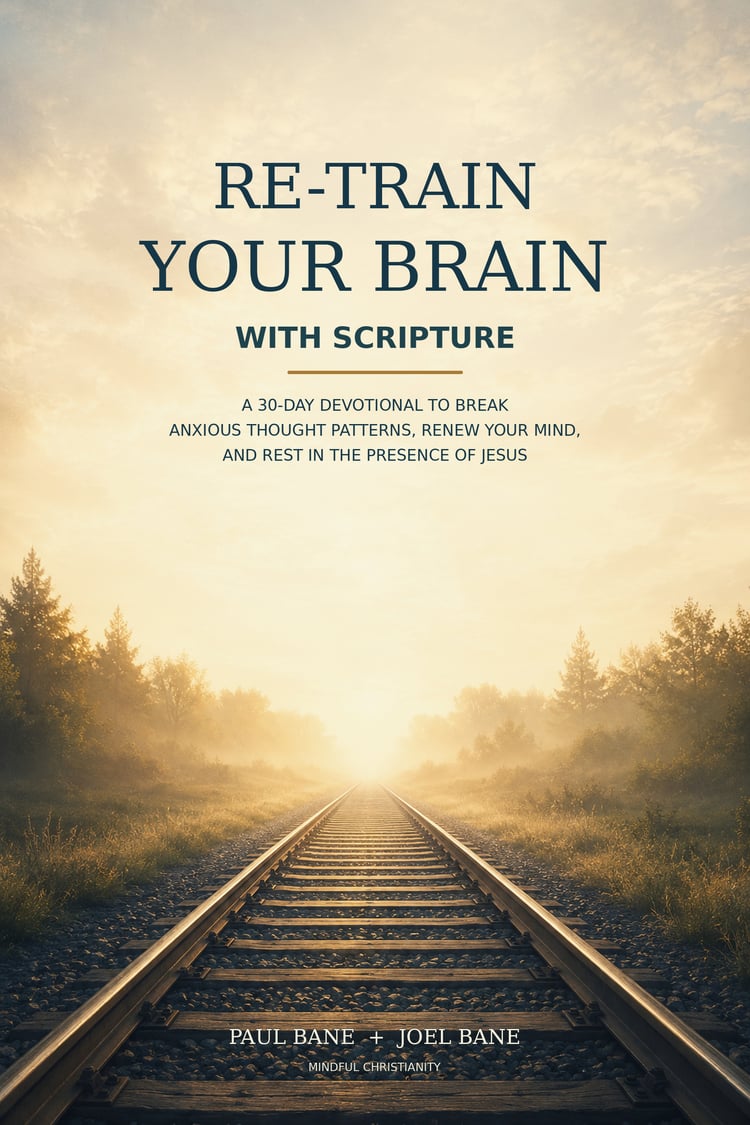
Re-Train Your Brain With Scripture
When a familiar memory keeps drawing you into the same painful conclusions, it can help to have a consistent place for Scripture, reflection, and prayer.
Our 30-day devotional by Paul Bane and Joel Bane guides you through Recognize, Replace, Rest, and Practice, with daily Scripture, reflections, prayers, and journaling space.
Let it accompany the patient work of noticing old thought patterns and learning to respond with truth and grace.
A question to carry into today
When you look back, is there a faithful action still yours to take—or a painful replay you can bring to God and gently step away from for now?
More encouragement for changing familiar patterns


Join the Mission
Help Paul and Joel continue creating free Scripture-centered encouragement, worship music, and resources that invite people to draw closer to Jesus.
Join the MissionFree Weekly Devotional
Receive Scripture, reflection, and encouragement from Paul and Joel each week—a gentle invitation to pause and become present with God.
Get the Free Weekly Devotional
Grace and peace,
Paul and Joel