Overcoming All-or-Nothing Thinking With Scripture
Overcoming All-or-Nothing Thinking With Scripture
One missed intention does not erase every faithful choice. Bring the whole picture to God, and consider what is still possible today.
You meant to begin the morning quietly. Instead, you overslept, hurried through breakfast, and answered someone more sharply than you intended.
By the time you reach the car, the sentence has already formed: Well, I have ruined today.
Perhaps it happens after missing a day of prayer, receiving a correction, or falling short of a goal. One disappointment becomes a reason to give up on everything that remains.
Overcoming all-or-nothing thinking with Scripture begins with noticing that leap. What happened matters. So does the conclusion you are drawing from it.
You can be honest about a difficult morning and still consider how to respond faithfully this afternoon.
Notice the rule behind the verdict
All-or-nothing thinking sorts an experience into two extremes: complete success or complete failure. It leaves little room for a day that contains both a mistake and meaningful effort.
Listen for the rule beneath your disappointment:
- “If I cannot do the whole practice, there is no point beginning.”
- “If I lost my patience, none of my progress was real.”
- “If I need help again, I have learned nothing.”
Ask whether that rule gives an accurate account of your life. What happened before the difficult moment? What choices remain available afterward?
You may discover that the disappointment is real, but the verdict has left out much of the story.
“We all stumble in many ways.”
James 3:2, excerpt (NIV)Let Scripture make room for honest growth
James 3 addresses the serious responsibility of our words. Its acknowledgment that we stumble belongs within a call to take that responsibility seriously.
Read James 3:1–12. Notice that the passage gives us reason to examine how we speak, including when our words hurt others.
You can acknowledge a failure without pretending that it cancels every earlier effort or prevents a different response now. A sharp remark may need an apology. It does not make a respectful conversation later in the day meaningless.
God’s grace gives you room to tell the truth and respond. Bring Him the specific action, ask for forgiveness where needed, and consider the repair before you.
Describe the moment with greater accuracy
Try replacing the sweeping sentence with a description you can work with.
“I ruined the whole day.”
I spoke impatiently this morning. I need to apologize and listen more carefully in our next conversation.
“I missed one day, so I cannot stay consistent.”
I missed yesterday’s practice. I can look at what interrupted it and choose a realistic time to return.
“I did not finish everything, so nothing counted.”
Some work remains. I completed part of it and need to decide what comes next.
These are reflective examples, not direct quotations from Scripture. Their purpose is to help you speak truthfully about the facts and the responsibility still before you.
You do not have to feel encouraged immediately. Begin with a sentence that is more accurate.
Choose a meaningful response within your limits
When your original plan is no longer possible, ask what still serves its purpose.
If the quiet hour disappeared, you might read a short passage thoughtfully and pray honestly. If a project remains unfinished, communicate what is complete and agree on the next step. If you hurt someone, make a specific apology without asking them to reassure you.
Some responsibilities require full completion, proper checks, or help from someone qualified. Be realistic about those requirements. Adjusting an ordinary plan does not mean lowering standards where care and safety depend on them.
For today, identify one response that is useful, honest, and possible. Let it count without requiring it to fix the entire day.
A Re-Train practice for the moment you want to give up
Use the Recognize, Replace, Rest, and Practice rhythm with one all-or-nothing sentence:
- Recognize. Write the thought exactly as it arrived. Identify the event and the larger conclusion you added.
- Replace. Read James 3:1–12 in context. Consider how its call to responsible speech helps you address a mistake without denying that everyone needs growth. Write a more accurate response to your situation.
- Rest. Bring your disappointment to Jesus. Pray, “Help me receive Your grace and see what needs care now.” Pause without demanding an immediate change in feeling.
- Practice. Make the apology, return to the passage, ask for support, or take the next appropriate action. Choose something concrete.
When the old verdict returns, you can examine it again. The need to practice does not erase the value of your earlier practice.
A prayer for room to begin again
Father, help me notice when one disappointment becomes a verdict about everything. Give me courage to name what happened honestly and humility to repair what I can. Keep me attentive to Your grace and to the choices still before me. Help me set realistic expectations, receive support, and continue with care. When I want to give up on the whole day, guide me toward one faithful response. Amen.
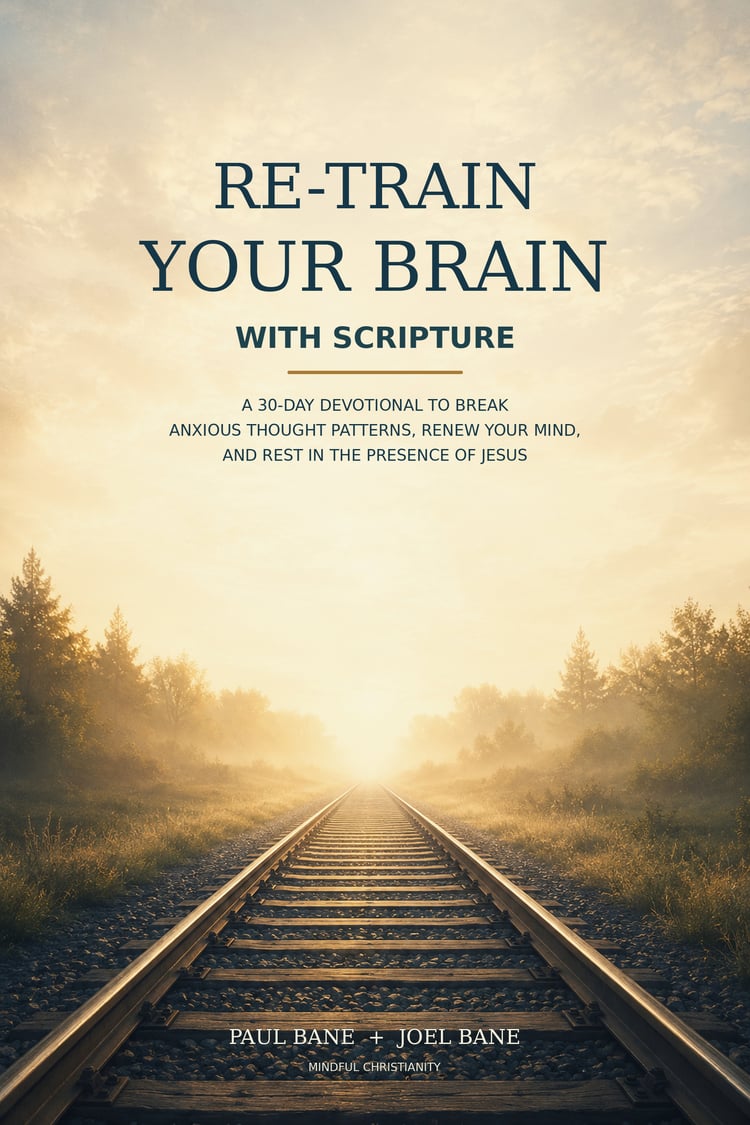
Continue with Re-Train Your Brain With Scripture
Re-Train Your Brain With Scripture offers a 30-day devotional journey through Recognize, Replace, Rest, and Practice.
Use its Scripture reflections and guided prompts to examine familiar conclusions and practice a response shaped by truth and grace.

Return to the practice with our free app
Be Still, Then Go includes a guided Re-Train Your Brain With Scripture journey with audio and captions. Make room to notice a thought, pray, and consider your next response.
Free for iPhone, iPad, and Android. No account or subscription required.
Explore the Free AppContinue Reflecting


Join the Mission
Help us share Scripture-centered encouragement through free reflections, weekly devotionals, music, and guided practices for everyday faith.
Join the MissionFree Weekly Devotional
Receive a quiet moment of Scripture, reflection, and prayer from Paul and Joel in your inbox each week.
Join the Free Devotional
Grace and peace,
Paul and Joel
Scripture quotations taken from The Holy Bible, New International Version®, NIV®. Copyright © 1973, 1978, 1984, 2011 by Biblica, Inc.® Used by permission. All rights reserved worldwide.