

Bible Verses for Fear of the Future: Finding Peace Today
Bible Verses for Fear of the Future: Finding Peace Today
Bring God the tomorrow you cannot see, and return your attention to the life and help available today.
You are doing something ordinary when the question arrives.
What if the news is bad? What if things change? What if you cannot handle what comes next?
Within minutes, your mind has moved months ahead. You are rehearsing conversations that have not happened and trying to prepare for several possible futures at once.
If you are looking for Bible verses for fear of the future, you may need more than someone telling you to stop worrying. You need room to name the uncertainty, remember God’s character, and consider what actually needs your attention.
These three passages offer places to begin. Read the surrounding verses, bring your own circumstances into prayer, and let one truth accompany you into today.
1. Psalm 56:3: You can turn toward God while afraid
“When I am afraid, I put my trust in you.”
Psalm 56:3 (NIV)Psalm 56 is a prayer spoken amid real danger and distress. The psalmist names fear while turning toward God in trust.
That gives us room for an honest beginning. You can be frightened about an unanswered question and still pray. You can ask for wisdom while your thoughts feel unsettled.
Try naming one concern rather than the whole future: Father, I am afraid of what this change could mean for my family.
Then consider what would help you face the situation responsibly. You may need reliable information, a practical conversation, or someone who can listen without rushing you toward an answer.
A prayer to borrow: Lord, I am afraid. Help me turn toward You and receive the support I need.
2. Matthew 6:34: Give today its proper attention
“Therefore do not worry about tomorrow…”
Matthew 6:34, excerpt (NIV)In Matthew 6:25–34, Jesus speaks about ordinary needs, the Father’s care, and seeking God’s kingdom. He also acknowledges that each day has trouble of its own.
His teaching can help us examine what we are carrying. Is there a responsibility to address today, or are we repeatedly trying to settle something we cannot yet know?
Thoughtful preparation has a purpose. You can make an appointment, gather information, or arrange support. After taking the useful step available, you may still be left with uncertainty.
When the same question returns without new information, gently notice it: I have reached the part I cannot answer today. Then choose where to place your attention next.
A prayer to borrow: Father, help me care for what is before me and entrust to You what remains unknown.
3. Hebrews 13:6: Remember where your help rests
“The Lord is my helper…”
Hebrews 13:6, excerpt (NIV)Hebrews 13:5–6 connects confidence in God’s help with His promise of faithful presence. Read those verses within the chapter’s practical calls to love, hospitality, and care for others.
The passage offers confidence in God’s character. It does not reveal the outcome of a test, promise that a relationship will remain unchanged, or give us advance knowledge of every difficulty.
As you pray about the future, make room to recognize help already available: a trusted person, a community that can share a burden, or someone qualified to guide a difficult decision.
You can ask for that help directly. Faith can take the form of admitting that you need company, information, or care.
A prayer to borrow: Lord, help me remember Your faithfulness and be willing to receive help today.
Separate the concern from the imagined outcome
Fear can move quickly from a fact to a prediction.
I am waiting for an answer can become The answer will be terrible, and I will not cope. The first sentence describes your situation. The second adds an outcome you do not yet know.
Try writing three brief lines:
- What I know: Name the facts available now.
- What I am imagining: Identify the feared outcome without treating it as settled.
- What I can do today: Choose an appropriate action, a request for support, or a time to revisit the concern.
You are allowed to say, “I do not know yet.” You can bring that unfinished answer to God without filling the gap with a prediction.
Carry one Scripture into the next hour
Choose one of the passages above and read it slowly in context. Notice what it says about God and what response it invites.
Then pray in your own words. You might say, “Jesus, I keep imagining what could happen. Help me attend to this conversation, this responsibility, or this moment of rest.”
Return to one ordinary part of your day. Prepare the meal. Listen to the person speaking. Complete the useful task you identified. Allow yourself to rest when rest is needed.
The concern may return. You can acknowledge it and return again, without judging the whole day by whether you felt peaceful.
If worry is persistently disrupting sleep, daily responsibilities, or relationships, consider speaking with a qualified mental health professional. Seeking support can belong alongside prayer and Scripture.
A prayer when the future feels frightening
Father, You know the questions I keep carrying into tomorrow. Help me name what I fear without letting every possibility become a prediction. Bring me back to Your faithfulness. Give me wisdom to prepare where I can, courage to ask for help, and patience with what remains unanswered. Guide my attention toward the people, responsibilities, and rest before me today. Help me turn toward You again when fear returns. Amen.
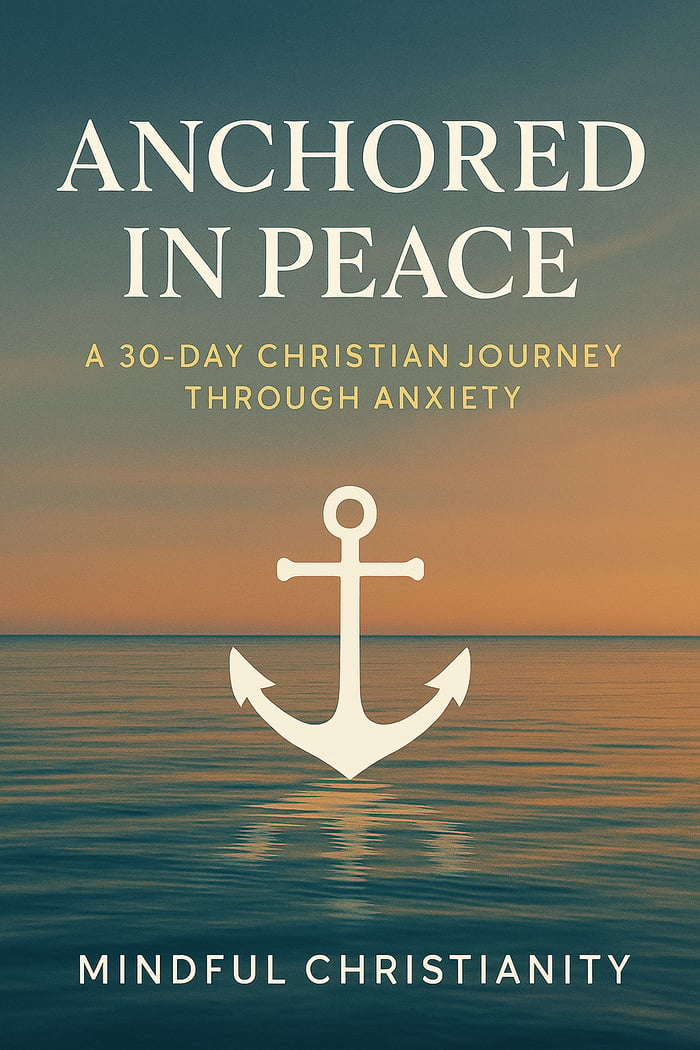
Continue with Anchored in Peace
Anchored in Peace is a 30-day Scripture-centered devotional and journal for seasons of anxiety, fear, and uncertainty.
Make room for honest reflection, prayer, and practices that help you turn toward Jesus as you face the day before you.

A guided prayer in the time you have
When you would welcome a little guidance, open our free Be Still, Then Go app. Choose a 1-, 3-, or 5-minute Pause & Pray session with audio and captions, then bring your own concern to God.
Available for iPhone, iPad, and Android. No account or subscription required.
Explore the Free AppContinue Reflecting


Join the Mission
Help us share Scripture-centered encouragement through free reflections, weekly devotionals, music, and guided practices for everyday faith.
Join the MissionFree Weekly Devotional
Receive a quiet moment of Scripture, reflection, and prayer from Paul and Joel in your inbox each week.
Join the Free Devotional
Grace and peace,
Paul and Joel
Scripture quotations taken from The Holy Bible, New International Version®, NIV®. Copyright © 1973, 1978, 1984, 2011 by Biblica, Inc.® Used by permission. All rights reserved worldwide.


