

Holiday Stress: Letting Go of the Pressure to Make Everything Perfect
Holiday Stress: Letting Go of the Pressure to Make Everything Perfect
Bring the expectations you are carrying to Jesus, and make room for a season shaped by love, attention, and grace.
You are standing in the store with a list on your phone when you remember three more things. There are gifts to choose, meals to plan, and messages you still need to answer.
Somewhere along the way, preparing for the holidays has begun to feel like being responsible for everyone’s happiness.
You want the gathering to be meaningful. You want people to feel loved. Yet each unfinished detail seems to whisper that you are falling behind.
When holiday stress grows around the pressure to make everything perfect, it helps to notice the expectations beneath the list. What are you asking yourself to provide? What do you fear an ordinary disappointment would mean?
“Come to me, all you who are weary and burdened, and I will give you rest.”
Matthew 11:28 (NIV)
Bring the pressure to Jesus before finishing the list
In Matthew 11:28–30, Jesus invites the weary to come to Him, take His yoke, and learn from Him. His invitation reaches us while we are still carrying burdens.
You can turn toward Him in the middle of an unfinished day. Tell Him what feels heavy: the spending, the planning, the fear of disappointing someone, or the thought that a successful holiday depends entirely on you.
A simple prayer might be, “Jesus, I want to care for people well, and I am trying to control more than I can carry. Help me see what deserves my attention.”
There may still be practical work to do afterward. Begin that work with room to receive help and reconsider the expectations you have attached to it.
Notice the rules making holiday stress heavier
Listen for the sentences that arrive with urgency:
- “If the house is not spotless, people will judge me.”
- “If I spend less, they will think I do not care.”
- “If anyone is disappointed, I have failed.”
- “We must keep every tradition exactly the same.”
These thoughts may feel familiar enough to sound like facts. Pause and examine one of them. Has someone actually asked this of you? Is it possible to meet the expectation? Does it account for your time, resources, and other responsibilities?
Perhaps a task needs attention. Perhaps you need to communicate a change. Keep those specific needs in view without turning them into a verdict about your worth or your love for your family.
Decide what matters in this season
Before adding more to the calendar, choose two or three things you genuinely value. Perhaps you want an unhurried meal, time to worship, or a visit with someone who would otherwise be alone.
Let those priorities guide the details. A simpler menu may leave you more able to sit at the table. Sharing the cooking may make hosting manageable. A smaller gift budget may help you give willingly and pay the bills already before you.
Ask the people involved what matters to them, too. You may discover that a tradition you feel obligated to maintain is one everyone would be happy to simplify.
If your plans have to change, explain that early. “We are making dinner simpler this year. Could each household bring one dish?” gives people a clear way to participate.
Practice a more truthful response to perfectionist thoughts
The Re-Train rhythm of recognizing, replacing, resting, and practicing can help you respond when familiar pressure returns.
- Recognize the thought. Write the sentence as it appears: “If the meal goes wrong, I will ruin the day.”
- Replace the sweeping conclusion. Read Matthew 11:28–30 slowly. Bring the pressure to Jesus and consider a more accurate response: “I can prepare carefully, ask for help, and respond with kindness if something changes.”
- Rest in His presence. Offer a brief prayer before reopening the list. You can remain with Him for a moment without checking whether you feel calmer.
- Practice one faithful action. Simplify a dish, ask someone to help, communicate your budget, or stop adjusting a detail that already serves its purpose.
The example response above is a reflection prompt, not a quotation from Scripture. Its purpose is to help you name your actual responsibility and leave room for what you cannot control.
Leave room for imperfect moments and real people
Someone may arrive late. The food may need another few minutes. You may realize you forgot something after the store has closed.
Pause before deciding what that moment means about the whole day. Ask what needs doing now. A practical adjustment may be enough.
If stress comes out as a sharp word, acknowledge it and repair what you can: “I am sorry I snapped. I was overwhelmed, and I should have asked for help.” Then consider how to share the remaining work.
Keep noticing the people around you. Sit down when you can. Listen through a story. Receive a kindness without immediately finding another task to finish.
Your own need for food, rest, and companionship belongs in the plan as well.
A prayer for holiday stress
Jesus, I bring You the list in my hands and the expectations behind it. Help me recognize where care has become pressure to control every detail. Give me wisdom to prepare responsibly, humility to ask for help, and courage to simplify what has become too much. When plans change, help me respond with patience. When I fall short, guide me toward repair and grace. Teach me to notice the people before me and receive the rest You invite me to find in You. Amen.
Bring recurring expectations into the light of Scripture
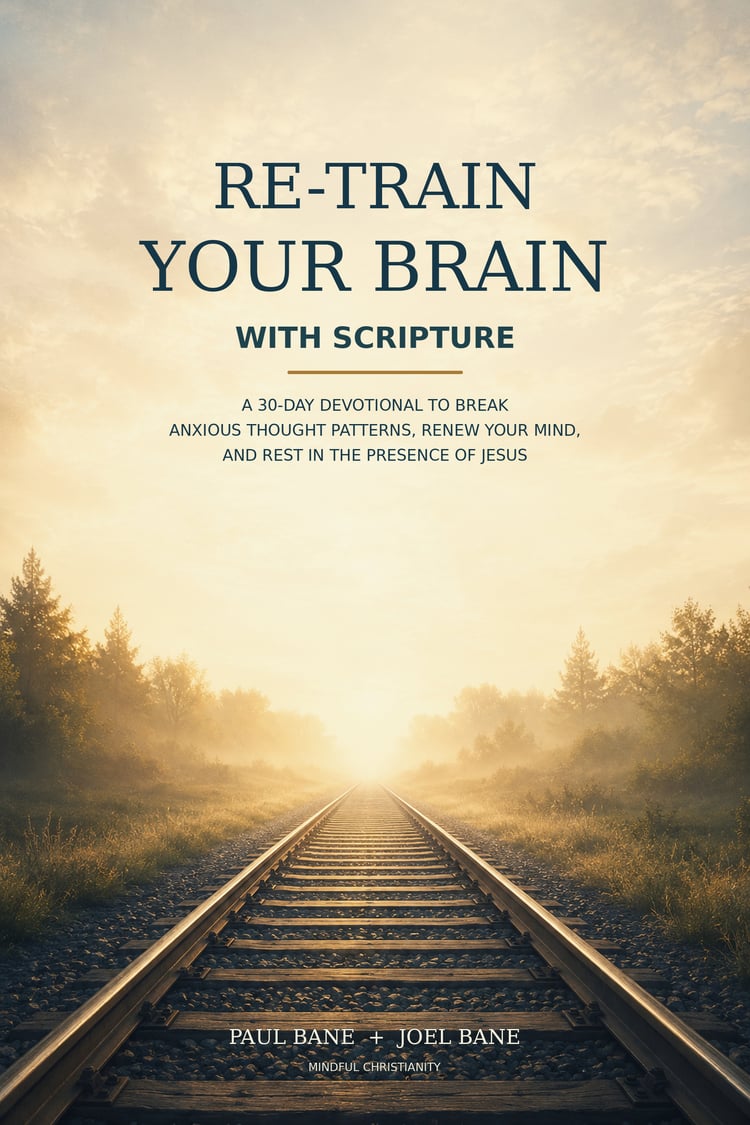
Re-Train Your Brain With Scripture offers a 30-day devotional journey for noticing recurring thoughts, returning to biblical truth, resting in the presence of Jesus, and practicing a faithful response.
Use its reflections, prayers, and journal exercises to explore the assumptions beneath perfectionism and make room for a more thoughtful way of approaching everyday responsibilities.

A quiet pause in a full season
The free Be Still, Then Go app offers guided moments of prayer and stillness. Take a few minutes to turn toward God before the shopping, between preparations, or as the day comes to a close.
Continue Reflecting


Join the Mission
Help us share Scripture-centered encouragement through free reflections, devotionals, music, and guided practices for everyday faith.
Join the MissionFree Weekly Devotional
Receive a quiet moment of Scripture, reflection, and prayer from Paul and Joel in your inbox each week.
Join the Free Devotional
Grace and peace,
Paul and Joel
Scripture quotation taken from The Holy Bible, New International Version®, NIV®. Copyright © 1973, 1978, 1984, 2011 by Biblica, Inc.® Used by permission. All rights reserved worldwide.


